
What really happens when you convert a diesel terminal tractor to electric?
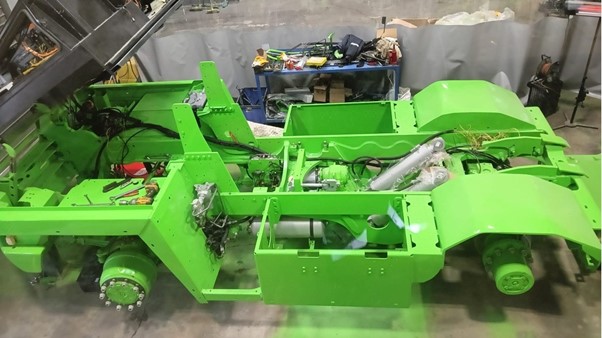
Electrifying an existing terminal tractor sounds simple.
Remove the diesel engine. Install batteries. Add an electric motor. Done.
In reality, a reliable retrofit requires a structured engineering process. Otherwise you risk reduced uptime, safety issues, or machines that look electric but do not perform like one in real terminal operations.
Together with Portunus Port Spares and Services, we developed the Ready Electric solution to convert 4×4 RoRo terminal tractors in a predictable and repeatable way. On the 13th of April in Vlaardingen, we will demonstrate this process live during the Ready Electric Roadshow.
Here is what actually happens behind the scenes when a diesel tractor becomes electric:
Step 1: Selecting the right base machine
Electrification does not start with batteries.It starts with choosing the right tractor.
Before conversion begins, the machine is screened for:
- structural chassis condition
- axle and driveline integrity
- hydraulic system health
- wiring harness condition
- expected remaining service life
If the base machine is wrong, electrification becomes expensive instead of efficient.
This selection phase determines whether retrofit makes technical and economic sense.
Step 2: Removing the diesel drivetrain
The combustion drivetrain is removed completely:
- engine
- gearbox
- exhaust system
- cooling components
- fuel system
This creates space and weight capacity for the electric architecture. One important advantage: fewer rotating components means lower maintenance demand afterwards.
Step 3: Integrating the electric powertrain
The electric drivetrain is engineered specifically for terminal duty cycles, not adapted from automotive solutions.
Typical system configuration includes:
- liquid-cooled PMSM electric motor (CRRC)
- peak output around 240 kW
- peak torque up to 3200 Nm
- high-voltage battery system around 652 V (CATL)
- approximately 198 kWh battery capacity (soon we expect an increase towards 225 kWh)
Torque delivery is immediate, which improves yard maneuverability compared to diesel machines.
Step 4: Battery placement and weight distribution
Battery integration is not just installation.It is engineering.
The battery modules must be positioned to maintain:
- axle load balance
- traction performance
- operator visibility
- service accessibility
- structural safety
Incorrect placement can negatively affect stability and tire wear. Correct placement improves machine behaviour.
Step 5: Electrical system integration
A terminal tractor is more than a drivetrain. Systems that must be integrated include:
- hydraulic pumps
- steering systems
- braking systems
- cabin electronics
- safety monitoring
- charging interfaces
The existing onboard systems must communicate correctly with the new electric architecture. This is where most retrofit projects become complex.
Step 6: Charging strategy engineering
Charging is not a hardware decision. It is an operational decision. Depending on terminal workflow, solutions typically include:
- AC charging overnight
- DC opportunity charging during shifts
- mixed charging strategies
Typical DC charging can reduce charging time to roughly 1–2 hours at 120 kW depending on configuration. Selecting the wrong charging setup can reduce availability more than electrification improves it.
Step 7: Safety, compliance and certification
Electrification changes the legal status of a machine. In Europe, retrofit solutions must address:
- functional safety
- EMC compliance
- CE conformity responsibilities
- risk assessment under ISO 12100
- possible RDW re-inspection for road use in the Netherlands
A professional retrofit is not only technical. It is regulatory.
Step 8: Testing in real terminal conditions
Bench testing is not enough. Converted tractors must be validated in:
- trailer handling cycles
- ramp work
- stop-start operations
- heavy pull conditions
- shift-based usage patterns
Only real operational testing confirms performance reliability.
Why retrofit instead of replacing the machine?
For many terminals, retrofit offers:
- shorter implementation timelines
- reuse of existing fleet assets
- lower investment compared to new electric tractors
- reduced dependency on long OEM delivery times
- a practical transition path toward zero-emission operations
Electrification does not always require replacing the machine. Sometimes it starts with upgrading the one you already own.
Experience Ready Electric live in Vlaardingen
On 13 April 2026, we will demonstrate the Ready Electric solution during a live terminal session at DFDS Vlaardingen.
During the event we will cover:
- technical screening before conversion
- drivetrain architecture
- charging strategies
- operational performance expectations
- retrofit vs replacement decision logic
And most importantly, you will see the machine operating in real terminal conditions. Seats are limited and participation is by invitation.
If electrification of your terminal tractor fleet is on your roadmap, feel free to reach out. Contact us via tigran@heavycargolifters.com!