
We need your help!
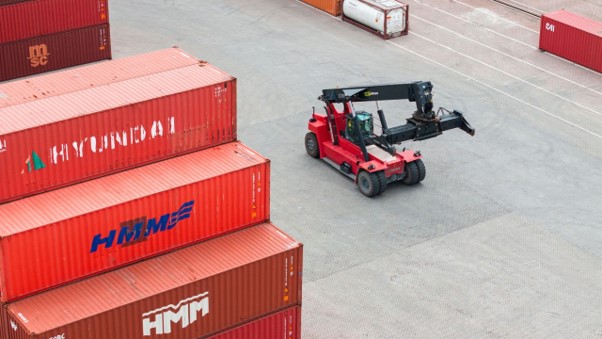
How do you keep an overview in your fleet data?
Visiting our customers is mostly for the reason that they want to get rid of a piece of port equipment such as reach stackers, terminal tractors, empty container handlers, heavy duty forklifts or mobile harbour cranes. And when we agree to sell our customer’s port equipment the next question is mostly:
Do you have all the maintenance history?
Usually we than receive some PDF files or an excel file. To share maintenance history is important in order to give a potential buyer the whole picture of the equipment that he buys. So this pretty much tells us that there’s mainteanance data, but the question that keeps coming back to me:
Do you really know which machine is costing you too much money?
Most terminal operators, fleet managers and CFOs know their total maintenance spend and in some cases also have an insight on equipment level.
But the real question is:
Do you know exactly where that money goes?
In many fleets, maintenance data is spread across invoices, ERP systems, accounting departments, workshop reports and Excel files. The costs are there. The descriptions are there. The history is there, but:
The insight is often missing.
You may know that your fleet is getting more expensive to maintain, but do you really know for what reason? Just some questions to reflect on the topic:
- Which machine has the highest maintenance cost per operating hour?
- Which unit mainly generates corrective maintenance?
- Which machine looks cheap on paper, but causes too much downtime?
- Which older machine is actually performing better than expected?
- And which “low-hour” machine is quietly becoming one of the most expensive units in the fleet?
This is where it gets interesting.
Because machine performance is not only about age, hours or purchase price. A machine with fewer hours can still create high corrective maintenance costs. An older machine can sometimes be surprisingly reliable. And two identical machines in the same fleet can show completely different cost behaviour, depending on usage, maintenance history, operators and operating conditions.
For many companies, the data is there! The answers are already hidden in their own maintenance invoices.
The challenge is turning that information into something useful. Without losing yourself in all kind of BI tools or long evenings trying to put all available data together
At Heavy Cargo Lifters, we increasingly see that customers are looking for more grip on their fleet. Not just a total maintenance number at the end of the year, but a clear view per machine, per hour and per type of service:
preventive maintenance, corrective maintenance, tyres and damages.
Because once you can compare machines properly, you can start asking much better questions.
Is this machine still worth keeping? Should we repair, replace or sell? Are we spending too much on breakdowns? Is one brand or model performing better than another? Are we detecting problems early enough?
We are currently researching this topic further with terminal operators and fleet owners in the port equipment industry.
The goal is simple: to understand how companies currently track maintenance performance, where the blind spots are, and how data can help make better fleet decisions.
So I am curious:
Do you recognise the lacking of detailed information in your own fleet?
Is the data there, and is it put together in a way that gives you an easy insight?
We are currently working on something in this area and would really value input from people who deal with these questions every day.

Do you have a clear overview of maintenance cost per machine and per operating hour? Can you easily separate preventive maintenance from corrective maintenance, tyres and damages? Do you know which machines are truly performing well and which ones are silently costing too much?
Would you help us? I would be very interested to hear how you currently deal with this.
Maybe you already solved it. Maybe you recognise the issue but have no clear solution yet. Or maybe your maintenance data is still sitting somewhere in the ERP system, waiting to become useful.
Feel free to reach out via this link or comment.